


Research impact amplified with key comms skills training
Posted 4 days ago
Recognising that researchers often face challenges when translating complex data for non-academic audiences, One Basin Cooperative Research Centre (CRC) offered customised training to help its project teams engage and communicate confidently with stakeholders throughout the project lifecycle.
-
Aligned with ISO 56000 Innovation Management Standards
-
20+ hours of competency-based learning
-
100% practical, portable skills
The Challenge
Research excellence does not always come with the broad communication proficiency required for adapting to the various information needs of different audiences. This capability gap can delay how new knowledge influences the intended impact of the research, both on and through government policy, industry adoption, and community acceptance.
It’s a particularly critical challenge for One Basin CRC, which exists so that scientists can work with local communities and industry partners to build a more productive, resilient and sustainable Murray-Darling region for current and future generations.
Because the impact of its research depends on how effectively technical findings are understood by non-academic stakeholders, One Basin CRC required funded projects to include communication planning within the project deliverables. It also acknowledged that some of its project teams might need a “less academic, more marketing and PR approach” when communicating their discoveries in ways that mattered or made sense to key funding partners and research beneficiaries.
“Opportunity cost” is a key concern for any research manager contemplating training for a project team. Researchers are highly protective of their time, and there is often a natural scepticism toward professional development that looks disconnected from their academic real work. To ensure project communication plans provided the strategic engagement and support needed to drive impact, One Basin CRC saw value in offering a voluntary training program that would help researchers meet contractual obligations with high proficiency, but without asking for too much of their time away from their primary research duties.
“We wanted our project teams to approach stakeholder engagement strategically,” said One Basin CRC’s Chief Operating Officer, Avril Hogan.
“It’s important that our researchers have the confidence to tell stories that industry and government could actually use to influence change.
“We also saw this as a professional development opportunity that enhanced the experience of being part of our collaborative research centre, especially for our PhD students,” Ms Hogan said.
The Solution
One Basin CRC engaged Impact Innovation to deliver “Amplify Your Impact – key comms skills for research teams”, a 10-week microcredential based on the principle of integrated output. This meant the training was a productive use of time – rather than studying hypothetical scenarios, participating researchers used their own projects and the CRC’s preferred communication and engagement planning templates.
The sessions were interactive and live, providing a space where researchers could build their communication strategies, draft messages, and practise adapting them for different audiences, all while receiving expert guidance. The sessions were recorded for future reference and supplemented by an extensive resource library accessed via a dedicated SharePoint site. This “zero-waste” approach ensured the training was a direct investment in the project’s required deliverables; not a distraction from project milestones, but a mechanism for achieving them.
 Impact Innovation aligned the program to the ISO 56000 Innovation Management Standards, which provided a systematic framework for moving beyond discovery-led reporting to effective knowledge transfer. For researchers used to working within structured scientific methodologies, this alignment provided a familiar, evidence-based framework for communication.
The program focused on 3 practical pillars of research communication:
1. Targeted Messaging
Effective communication requires identifying who needs to know what, then how and when. The training helped researchers map out their particular stakeholder groups and tailor their messages to ensure the information was relevant, readable, and actionable for those specific audiences. This included understanding the communication preferences of First Nations communities.
2. Expressing Value
The researchers were challenged to shift their focus from “what the research is” to “what the research makes possible.” By clearly articulating the economic, societal, and environmental benefits of their work, they learned to write for the different audiences that have a vested interest in the project’s intended impacts, including policymakers, industry influencers, and community groups.
3. Plain English Mastery
Technical jargon is often necessary for peer-reviewed journals, but it can be a barrier to stakeholder engagement. The program offered alternative approaches, such as storytelling and replacing technical density with everyday analogies. It also addressed language choices and editing techniques to reduce the verbosity often associated with traditional academic writing.
“When our researchers communicate better, our entire innovation system benefits.”
The Outcomes
By addressing communication capability and requirements at the project level, the CRC encouraged its researchers to consider impact messages earlier. Participants reported a significantly improved understanding of how to communicate research outcomes succinctly and strategically.
Those who engaged with the training submitted robust communication plans, fact sheets and social media posts that clearly identified end-users and defined paths to impact while meeting the CRC’s expectations for strategic stakeholder engagement.
“The standard of the communication documents produced by the participants demonstrated the program’s practical value,” Ms Hogan said.
“When our researchers communicate better, our entire innovation system benefits. In a high-stakes funding environment, the ability to produce high-quality, targeted documentation without the need to rework it for different audiences improves organisational efficiency.
“By focusing on research impact rather than project milestones, our teams gained transferable skills for turning complex data into something influential, and that has supported the entire organisation to move confidently toward its goals.”
Participants were offered the opportunity to earn a non-credit microcredential aligned with Australia’s National Microcredentials Framework. For researchers who value formal recognition of the time and effort invested in professional development, the awarded digital badges and certificates provide portable, verifiable evidence of their communication competency.
Providing this level of training demonstrated that the CRC valued the time and effort researchers invested in their professional development, treating it as a worthwhile addition to their career portfolios.
One Basin CRC has now seen improved compliance with contractual expectations around communication and stakeholder engagement while ensuring its research is better positioned to inform the sustainable future of the Murray-Darling Basin. The “Amplify Your Impact” program turned a mandatory administrative task into a strategic asset, proving that the most efficient way to drive research impact is to equip the researchers themselves with the skills to articulate it.
Find out how One Basin CRC is growing value from water in a changing world: https://onebasin.com.au | https://www.linkedin.com/company/one-basin-crc/
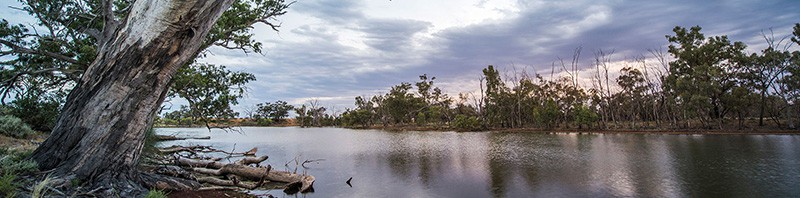
Banner image: © State of New South Wales
Want your researchers to become better communicators and amplify your centre’s research impact? Start the conversation here: a.crossan@impactinnovation.com.